

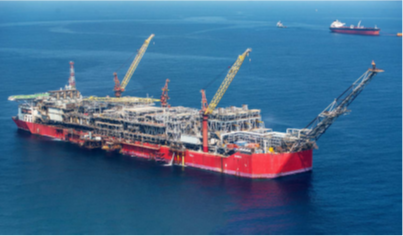
Shell’s Nigerian deepwater subsidiary has resumed production at the Bonga field, one of sub-Saharan Africa’s most significant offshore oil developments, after completing a major maintenance overhaul eleven days ahead of schedule, a result that will ease pressure on Nigeria’s beleaguered crude output figures and deliver a fresh financial boost to Africa’s largest economy.
Shell Nigeria Exploration and Production Company (SNEPCo) said the turnaround maintenance on the Bonga Floating Production, Storage and Offloading (FPSO) vessel concluded successfully on March 6, with hydrocarbons flowing again from a field that has produced well over one billion barrels since it came onstream two decades ago.
The exercise began on February 1 and was completed without a single safety incident.
The timely restart could not come at a more critical moment. Nigeria, once Africa’s dominant oil exporter, has struggled in recent years with chronic production underperformance, pipeline vandalism and ageing infrastructure. Every barrel brought back online carries outsized importance for a government heavily reliant on petroleum revenues to fund public services and service its debt.
“Completing the turnaround safely and ahead of schedule is a testament to the dedication and professionalism of our Nigerian workforce,” said Ronald Adams, SNEPCo’s managing director. Adams added that the achievement “positions us strongly for the successful delivery of the Bonga North project,” a planned expansion expected to extend the field’s productive life significantly.
Beyond the barrels, SNEPCo said the maintenance exercise served as a striking demonstration of the depth of indigenous oil and gas capability Nigeria has cultivated over decades.
Of the 55 companies involved in executing the turnaround, 43 were wholly Nigerian-owned. More than 1,000 personnel worked offshore during the project, with over 95 per cent being Nigerian nationals engaged across maintenance, engineering, operations, inspection and construction roles.
The figures underscore a notable shift in the character of Nigeria’s deepwater sector, which was once almost entirely dependent on expatriate expertise. Eight of the 12 international service providers involved maintain permanent operational bases in Nigeria, contributing to technology transfer and sustaining local investment at a time when the government in Abuja is pressing oil majors to do more to develop domestic capacity under the Petroleum Industry Act.
Adams acknowledged the role of the Nigerian National Petroleum Corporation’s upstream investment management arm, NUIMS, as well as the Nigerian Upstream Petroleum Regulatory Commission and the Nigerian Content Development and Monitoring Board in enabling the smooth execution of the overhaul.
For Shell, which has been gradually restructuring its Nigerian footprint, divesting onshore assets mired in legal disputes and community conflicts while doubling down on its deepwater positions, the Bonga restart represents a reaffirmation of its long-term commitment to the country’s offshore sector.
The company has consistently flagged deepwater as the growth engine of its Nigerian operations, and the swift completion of the maintenance outage will be welcomed by Shell’s London headquarters as a rare piece of unambiguous good news from a country that has tested the patience of international investors.