

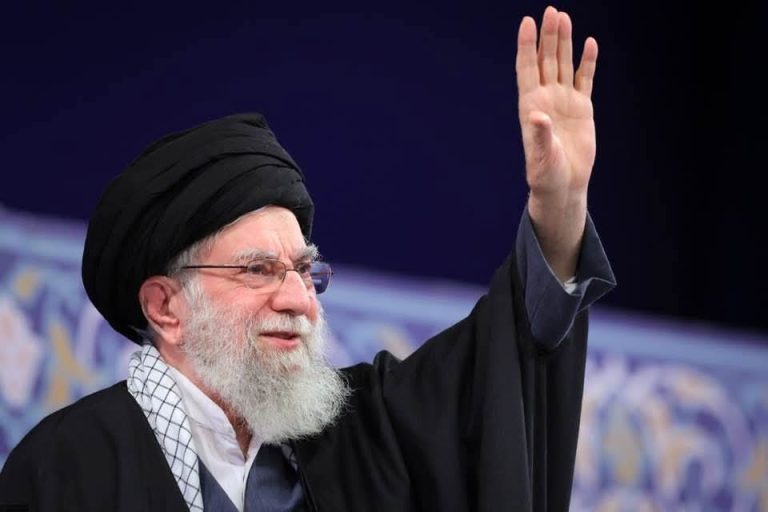
Iran’s Supreme Leader, Ayatollah Ali Khamenei, has been killed in coordinated air strikes carried out by the United States and Israel, according to confirmations by Iranian state media.
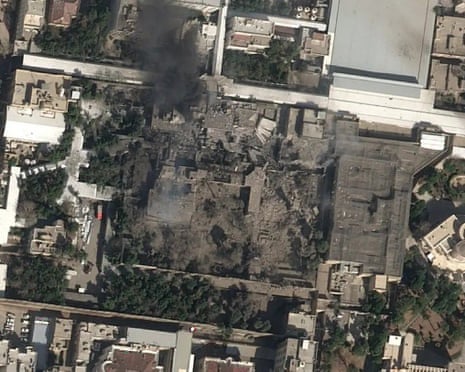
State television announced that the 87-year-old cleric was killed early Saturday morning in his office in Tehran during what it described as intense bombardment targeting key military and leadership facilities.
A statement read on air by Iran’s Supreme National Security Council declared that Khamenei was killed “while carrying out his duties,” describing his death as “martyrdom” and blaming the United States and Israel for the attack.
The country has declared 40 days of public mourning and seven days of public holidays.
Heavy Casualties Reported Across Iran. The strikes have resulted in significant casualties.
The Iranian Red Crescent says more than 200 people have been killed nationwide, while a Washington-based Iranian rights group reports at least 133 civilian deaths and over 200 injured in multiple provinces.
Iranian authorities say at least 108 people were killed when a girls’ school was struck during the bombardment.
Tehran has been the hardest hit, with explosions continuing to ring out across the capital as dawn broke on Sunday.
Sources quoted by international media indicate that around 40 senior Iranian officials may also have been killed in the strikes.
Among those reportedly killed are senior commanders of the Islamic Revolutionary Guard Corps (IRGC), including its commander-in-chief and other top security figures.
Iran Vows “Devastating Offensive”
In swift reaction, the Islamic Revolutionary Guard Corps warned of what it called “the most devastating offensive operation in the history of the Islamic Republic.”
Iran has already launched retaliatory strikes targeting locations hosting US military bases and allied facilities across the Gulf region.
Explosions and drone interceptions have been reported in parts of:
Dubai, Doha, Bahrain and
Kuwait
Authorities in Dubai confirmed that four people were injured following an incident at Dubai International Airport, while separate drone-related incidents were reported at ports and airports in the United Arab Emirates.
Warning sirens were also heard in Israeli cities, including Tel Aviv and Haifa, amid fears of further escalation.
US President Donald Trump described Khamenei as “one of the most evil people in history” and said his death presented “the single greatest chance for the Iranian people to take back their country.”
In a post on his Truth Social platform, President Trump warned Iran against retaliating further.
“Iran just stated that they are going to hit very hard today… THEY BETTER NOT DO THAT… because if they do, we will hit them with a force that has never been seen before,” he wrote.
The US Central Command later confirmed it was carrying out what it termed “major combat operations” in Iran.
However, the operation has reportedly divided US lawmakers, as the US Constitution requires congressional approval to formally declare war.
Mixed Reactions Inside Iran
Reactions within Iran have been sharply divided.
Verified videos circulating online show scenes of celebration in some cities, including residents cheering and setting off fireworks.
In parts of Isfahan and Karaj, crowds were seen honking car horns and lighting bonfires.
Conversely, in Tehran and other areas, thousands gathered to mourn the cleric, holding his photographs and chanting religious verses.
One Tehran resident told international media that Khamenei’s death was “such good news,” while state television broadcast Quran recitations alongside images of the late leader.
Transition of Power Begins
Iranian authorities have announced that the President, the head of the judiciary, and a cleric from the Guardian Council will temporarily oversee state affairs.
Under Iran’s constitution, the Assembly of Experts, a body of 88 clerics, is responsible for appointing a new Supreme Leader as soon as possible.
The process, however, may prove difficult amid ongoing military attacks.
Khamenei himself assumed leadership in 1989 following the death of Ayatollah Ruhollah Khomeini and had ruled Iran for 37 years.
A Defining Moment in Iran’s History
International analysts describe the killing of Iran’s Supreme Leader as a defining and potentially transformative moment in the country’s turbulent political history.
The development raises critical questions about regional stability, succession politics within Iran, and the possibility of broader conflict across the Middle East.
As strikes and counter-strikes continue, global leaders have called for restraint to prevent the crisis from escalating into a wider regional war.