

THE Lagos State Ministry of Justice has clarified that the recent judgment of the Court of Appeal, Abuja Division on the activities of Vehicle Inspection Officers (VIO) in the Federal Capital Territory (FCT) does not invalidate the operations of the Lagos State Vehicle Inspection Service (VIS) on Lagos roads.
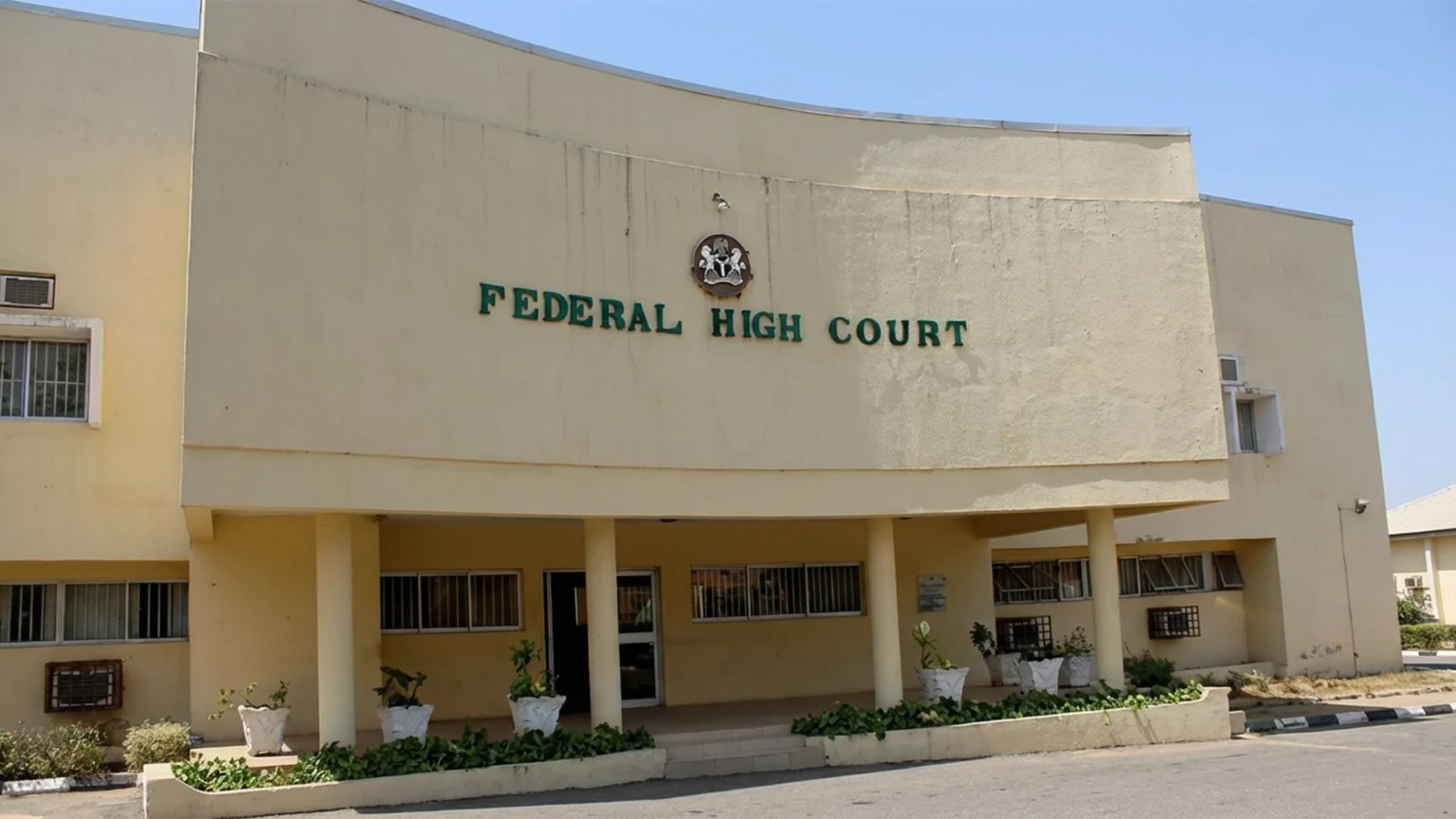
The state government said its attention had been drawn to what it described as a viral misrepresentation of the appellate court’s decision, which affirmed the judgment of the Federal High Court Abuja, declaring certain VIO enforcement activities in the FCT illegal.
This was disclosed yesterday signed by the Lagos State Attorney-General and Commissioner for Justice, Mr Lawal Pedro (SAN).
The government recalled that in 2025, Justice Evelyn Maha of the Federal High Court, Abuja, in a fundamental rights enforcement suit, held that the respondents in the case including the Director of Road Transport, the Team Leader, Area Commander, Jabi, and the Minister of the FCT were not empowered by any law to stop, impound or confiscate vehicles or impose fines on motorists within the FCT.
The trial court consequently restrained the VIO from impounding or confiscating vehicles and from imposing fines on drivers in Abuja. The decision was subsequently affirmed by the Court of Appeal, Abuja Division.
According to the Lagos State Government, both courts premised their decisions on the absence of statutory powers conferred on the respondents to carry out such enforcement activities within the FCT.
While acknowledging that the judgments are valid and binding in law, the Ministry of Justice stressed that they are not of general or nationwide application.
“The judgment, though binding, is not of general application across Nigeria adding that only parties to the suit and jurisdictions without enabling statutes on VIO operations, such as the FCT, are affected by the ruling.
The government emphasised that Nigeria operates a federal system of government, with legislative powers clearly delineated between the federal and state governments under the Constitution.
He noted that, ‘vehicle inspection and traffic management fall within residual matters for state governments.
Unlike the FCT, Lagos State, he said, has a specific statutory framework regulating the activities of its Vehicle Inspection Service under the Lagos State Transport Sector Reform Law.
Under Section 12(1) of the law, the State Vehicle Inspection Service is empowered to inspect, regulate and ensure the roadworthiness of motor vehicles; conduct pre-registration inspections; issue Road Worthiness Certificates; and cooperate with other agencies in enforcing traffic regulations.
The Ministry further cited Section 23(1) of the law, which prescribes fines for offences and outlines the procedure for payment. According to the provision, fines may be paid on the spot if imposed by a mobile court or within 48 hours upon issuance of a ticket by an authorised officer.
Where a motorist defaults in payment, a formal charge may be filed before a Magistrate or Mobile Court, with the alleged offender entitled to defend himself or herself. Motorists also retain the right to challenge the validity of any ticket before a court of law.
The government maintained that the enforcement procedures adopted by VIS officers in Lagos are in strict compliance with the state law and are neither unlawful nor unconstitutional.
He therefore advised members of the public not to be misled by what it described as a misinterpretation of the Federal High Court and Court of Appeal judgments, urging motorists in Lagos to cooperate with VIS officers to avoid sanctions.
He added that the state would continue to ensure that transport and traffic enforcement activities are carried out with civility, decorum and respect for road users.
It also warned that any motorist who disobeys or assaults a VIS officer in the course of carrying out statutory duties would be liable to arrest and prosecution.