

The Nigerian National Petroleum Company (NNPC) Limited has signed a tripartite memorandum of understanding (MoU) with China Gas Holdings Limited and Peiyang Chemical Singapore PTE (PCCS) Ltd to enhance liquefied natural gas (LNG) development in Nigeria.
In a statement on Monday by PCCS, the company said the MoU establishes a framework for structured collaboration across key segments of Nigeria’s natural gas value chain.
The MoU was signed in Abuja, with Bayo Ojulari, NNPC’s group chief executive officer, Olalekan Ogunleye, executive vice-president for gas, power and new energy, and Ibrahim Hamza, general manager of the NNPC gas and power investment services, in attendance.
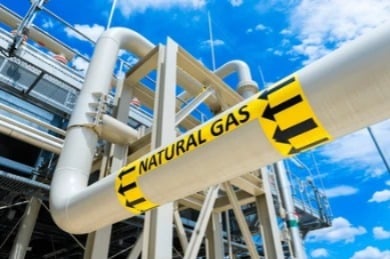
“The agreement covers liquefied natural gas development, spanning flare-gas-to-LNG, floating LNG, and onshore LNG initiatives, alongside gas-fired power generation and industrial facilities utilising domestic gas feedstock,” the company said.
“This MoU serves as the primary vehicle to align international technical expertise with Nigeria’s domestic energy priorities, providing a formalised governance structure to transition identified opportunities from technical feasibility through to commercial operations.”
The signing was followed by an extensive programme of engagement by the China Gas and PCCS delegation across Nigeria’s energy sector.
“Discussions with Heirs Energies Limited examined downstream CNG and LNG opportunities, including a 15MMSCFD supply discussion and project delivery considerations, while separate meetings with refinery leadership focused on the integration of gas supply into refining and industrial operations,” the PCCS said.
“The delegation also held discussions with the Ministry of Finance Incorporated (MOFI) regarding financing structures relevant to large-scale gas infrastructure development.
Speaking at the signing ceremony, Tim Tian, managing director of PCCS, said the company’s role is to integrate proven modular engineering with locally tailored commercial frameworks, making projects both investible and achievable.
He said this approach accelerates the development of scalable gas infrastructure, which is essential for turning resources into jobs, reliable power, and industrial growth.