
The Nigerian Midstream and Downstream Petroleum Regulatory Authority (NMDPRA) has condemned the slow progress made in the country’s electricity generation in the last 20 years, lamenting that it has only increased from 4,500MW to 5,000MW in two decades.
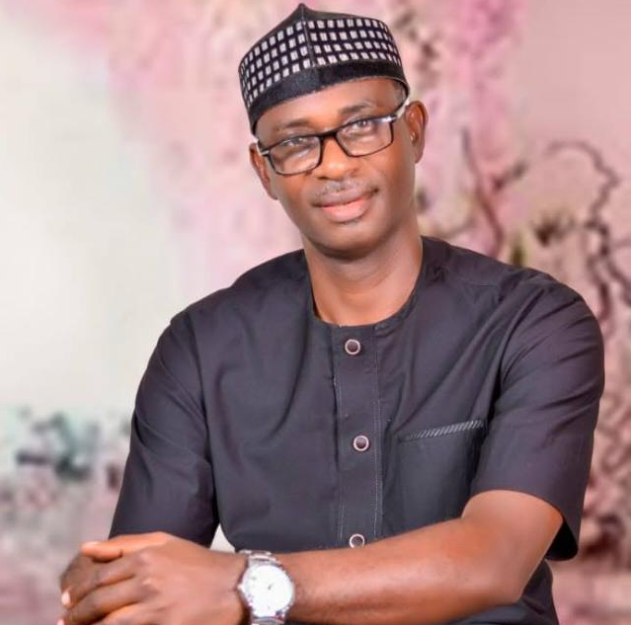
In his regulatory address on the “National Gas Day: Unlocking Nigeria’s Gas Advantage for Power, Industry and Growth,” at the ongoing 9th Nigerian International Energy Summit (NIES) in Abuja, the NMDPRA Chief Executive Officer, Engr. Saidu Mohammed expressed dissatisfaction that 25 years after the Olusegun Obasanjo administration’s record of 4,500MW generation, the country is still hovering around 5,000MW.
His words, “About 20 years ago or more, when I was a younger engineer operating a department of a Nigerian gas company, I remember, I think it was the first year or second year of Obasanjo’s regime, we celebrated 4,500 megawatts of electricity generated at that time. 25 years later, we are still hovering around 5,000 megawatts.”
He said, unfortunately, Nigeria has been battling with the challenge of gas to power over the years, despite handing over the Power Holding Company (PHCN) to private operators.
“We have been talking of gas to power, for us actually, some of us grew in it. As younger engineers, we have been talking about gas to PHCN to the privatized companies, and unfortunately, in Nigeria, we are still hovering around the same,” said the NMDPRA boss.
According to him, the Nigerian Electricity Supply Industry (NESI) is not held down by a lack of generating capacity because it has capacity for 13,000MW.
He said only a little of the constraint is transmission-induced.
Mohammed said, “It is rather unfortunate that we are still hovering around 5,000 megawatts or so. Not because there is no generating capacity, there is up to 13,000 megawatts. There is a little bit more constraint in terms of wheeling capacity.”
On gas shortage, he said, despite the country’s over 200 trillion cubic feet reserve, only 8 billion standard cubic feet is produced for utilization.
The NMDPRA boss said the complaint of the power-generating companies has been a lack of gas.
He asked the generators how much they requested that was not delivered to them.
Gas, according to him, is not just an energy commodity; it is an economic enabler.
He added that without gas, there is no sustainable power.
For increased gas supply, Mohammed sought improved gas prices and transparency.
‘Prices of petrol, diesel, LPG will continue to fall’
NMDPRA seeks additional $50b investments in midstream sector
He said Section 167 mandates the NMDPRA to determine the base price and also be transparent in determining the gas transportation tariff.
According to him, NMDPRA will continue in its efforts to strengthen the discipline on that network through the operationalization of the gas network code.
He stressed, “Gone are the days when gas will just be supplied from base and river. Gone are the days when the operator of the network will not explain to us the losses.”
The Petroleum Industry Act (PIA), he said, recognizes pricing in gas and the power to determine gas to power, which solely lies with the NMDPRA.
The NMDPRA, he said, is also to determine the rate of the gas-based industries and a capped price for the commercials.
Mohammed said the Authority is deliberately moving from a control-based regulator culture to an enabling and performance-driven framework. He stressed that domestic gas supply is a priority and NMDPRA will continue working with the Nigerian Upstream Petroleum Regulatory Commission (NUPRC) to enforce the domestic gas supply obligations.
He added that NMDPRA shall determine the domestic gas demand requirement, which will form the basis of the obligation.
Speaking in a panel session tagged “The Road Ahead: Finance, Gas, Media Sustainability,” the Decade of Gas Coordinator, Mr. Ed Ubong, insisted the government does not want to owe gas producers.
He said it means that gas producers must pay for the gas they consume or demand.
He revealed that, consequently, the office has just closed the bid round to raise additional financing to be able to defray the gas sector debts.
Ubong said President Bola Ahmed Tinubu had approved for upstream producers to be able to take their debts from royalty payments.
He added, “It really doesn’t make sense for a gas producer to continue to give government royalties when the government is doing that. So there’s been a conversation there, finally approved by the governors and the president. There is a small net that allows you to keep producing gas.”
He said the NNPCL, NUPRC, and gas producers have worked out the method for the payment of the royalties.
Ubong said, “If I owe you and I have not paid you, please take a small part of it before you pay royalties. And that has been worked on by the NUPRC, NNPC, and all these other gas producers.”