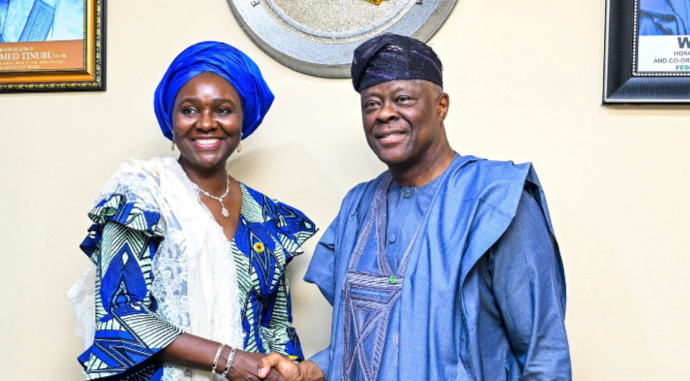



The Chief Executive Officer of the Nigerian Upstream Petroleum Regulatory Commission (NUPRC), Oritsemeyiwa Eyesan, has emphasized the need for consistent and harmonized regulatory policies as a critical tool for attracting investments into the petroleum industry.
According to Eyesan, investors are not deterred by African geology, but by inconsistent rules.
Eyesan who was represented by Edu Iyang, Director of Economic Relations and Strategic Planning, NUPRC, at the Nigerian International Energy Summit in Abuja on Monday, noted that harmonized regulatory policies lower investment risks and facilitate cross-border energy projects.
She said that integrated energy markets, cross-border infrastructure, and consistent regulatory regimes reduce risk, improve bankability, attract private capital, and enable development partners to confidently support transformative projects that drive shared long-term prosperity.
“Nigerian Upstream Petroleum Regulatory Commission, together with the sister regulators across the continent, established African Petroleum Regulators Forum, AFRIPEF, last year. AFRIPEF is now advancing regulatory convergence through a land standard, shared data, capacity building, and unified African force on a global platform.
“With this foundation in place, investors gain predictability and consistency while countries benefit from fast project execution and brothership prosperity.
“When countries harmonize policies and regulations, Africa can leverage its own financing institutions, such as African Energy Bank and African Bank, to de-risk projects, accelerate industrialization, expand electricity, and unlock jobs and revenue. At the same time, partners like World Bank and other developing finance institutions can invest more efficiently on regional priorities,” she said.
Eyesan also announced that Nigeria has taken deliberate steps to spearhead regulatory alignment and gas-driven development in this long-awaited new era of African energy integration.
She explained that through the Petroleum Industry Act, the Nigerian government has strengthened governance, transparency, and investors’ confidence, laying the foundation that cross-borders projects remained under the official direction of President Bola Tinubu.
She said, “We are deliberately creating a physically attractive, cost-competitive, and business-friendly environment to unlock Nigerian fast gas reserve, to power homes, industry, and regional growth, positioning gas as a Riga transition fuel.
“Alongside other complementary measures already in motion, we are currently conducting block licensing rounds with full transparency, giving investors a clear path to Nigerian fast and promising hydrocarbon basins while supporting sustainable long-term growth.
“Our mission is clear. To expand reserve, optimize production, and responsibly increase output, ensuring that Nigerian energy development drives economic prosperity, safeguards the environment, and sets the benchmark for the continent’s energy future.
“Across the continents, pipelines are turning visions into reality. The AKK pipeline backbone, the flexible West African gas pipeline, the Nigerian-Morocco Atlantic gas pipeline, and the revived Trans-Saharan gas pipeline are niching African energy markets together like never before. Complementing this, the African Energy Bank headquarters in Nigeria is mobilizing African capital for African projects, closing financial gaps left by global withdrawal.
“These are not just national initiatives, they are continental commitments, unifying policy, connecting infrastructures, and building energy corridors that Africans need to thrive.”