


The Nigerian National Petroleum Company Limited (NNPC) says the Ajaokuta-Kaduna-Kano (AKK) Gas Pipeline Project will begin delivering gas to Abuja for power generation before the end of 2026. BuyMaps
The Group Chief Executive Officer of NNPC, Bayo Ojulari, disclosed this on Monday at the ongoing 2026 Abu Dhabi International Petroleum Exhibition and Conference (ADIPEC) in Abu Dhabi, United Arab Emirates.
Speaking on the topic, “Nigeria’s Reform Agenda: Competing for Energy Capital,” Ojulari said the 614-kilometre pipeline would also supply gas to Kaduna and Kano in 2027.
He said the Obiafu-Obrikom-Oben (OB3) gas pipeline project had reached 100 per cent completion, adding that the company was ramping up production to utilise its capacity of supplying one billion cubic feet of gas daily.
“The OB3 was 100 per cent completed, and now we are ramping up production; it has capacity to go to one bcf of gas supply for the country. And then we are moving to the AKK.
“Excitingly, we are looking forward to bringing gas to Abuja for power generation before the end of this year. And by next year, we are looking forward to then expand into the other nodes, which is Kaduna and Kano, that are the true hubs in the north,” he said.
Ojulari said the projects would help connect gas supplies to data centres and industrial hubs, allowing the company to unlock the country’s gas potential.
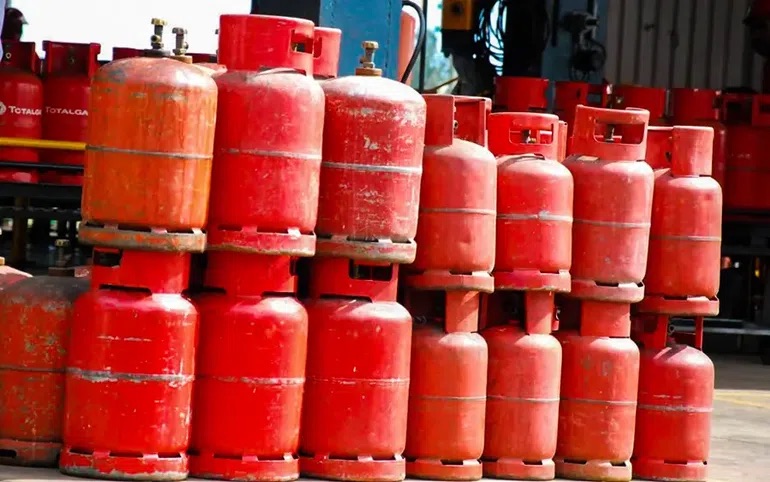
On the use of compressed natural gas (CNG) as an alternative fuel following the removal of petrol subsidy in 2023, the NNPC chief said the initiative had the potential to reduce transportation costs by up to 60 per cent.
He said more than 400 conversion centres were operating across the country, helping vehicle owners convert their vehicles to run on CNG.
Ojulari added that more than 1,000 trucks were using CNG to transport petroleum products across the country.
He said the company planned to increase the number of CNG stations to more than 1,000 by the end of 2027.
On the proposed initial public offering (IPO) of NNPC, Ojulari said the company was ready but declined to give a timeline, noting that the decision would depend on the board’s resolution.
He disclosed that NNPC conducted a baseline study in September as part of the process.
The NNPC boss also highlighted Nigeria’s performance in the liquefied natural gas (LNG) sector, noting that Train Six was performing well while construction of Train Seven was ongoing.
According to him, Train Seven is expected to be commissioned in 2027, increasing Nigeria LNG’s output from about 22 million tonnes to 30 million tonnes.
“The commissioning is in for next year. We hope to commission Train Seven next year, and from next year, we’re taking the total LNG output from NLNG from about 22 tons to 30,” he said.
Ojulari further disclosed that the number of active oil rigs in Nigeria had increased to 70.
Meanwhile, NNPC’s Executive Vice President, Udy Ntia, said the company’s upstream operations were focused on improving operational resilience, controlling production costs, preventing cost overruns and expanding operations through technology.
Speaking during a panel session titled “Upstream Portfolio Resilience: Designing for Political and Market Stress,” Ntia said the company was deploying technology, including predictive maintenance, particularly for subsea operations across West Africa, to improve efficiency.
He said NNPC was also working to avoid rigid portfolio restrictions that could extend beyond their intended timelines.
According to him, the company’s strategy includes exploratory activities, developing pathways for moving products to markets, building alternative pipelines to minimise disruptions and strengthening resilience across the entire value chain, from reservoirs to revenue streams.
Also speaking at a session titled “Upstream Consolidation: Competitive Advantage and the Limits of Scale,” the Managing Director of NNPC 18, Ibiyemi Asaolu, disagreed with the description of lost oil production as deferred production.
She argued that companies could not recover revenue lost when production was halted, even after operations resumed.
“And I really do not agree with it when people call production deferred. When you lose production for a month and then you come back to start producing, it is not deferred; the money is gone. You really cannot recover that,” she said.
Asaolu attributed a threefold increase in NNPC 18’s production over the past year to the company’s focused approach.–