

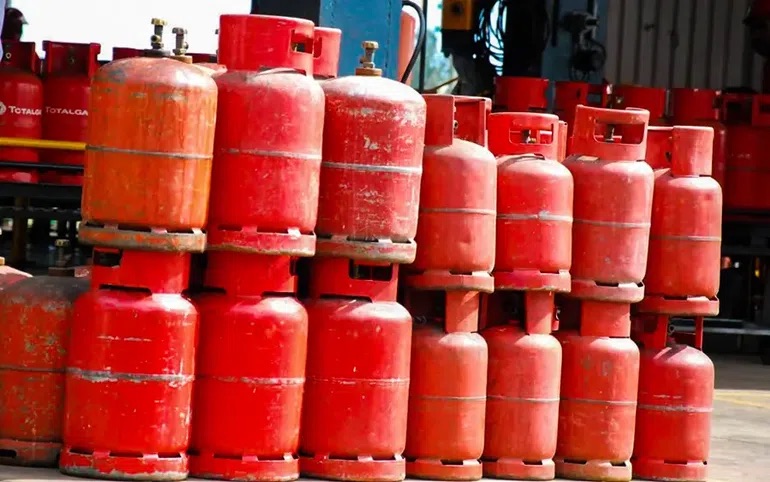
The Nigerian Association of Liquefied Petroleum Gas Marketers (NALPGAM) has asked the Federal Government to include licensed marketers in free cooking gas cylinder distribution and refill programmes.
The association said its members can help the government reach more households, improve cylinder safety and speed up the adoption of liquefied petroleum gas (LPG), commonly called cooking gas.
The call came after NALPGAM’s 2026 webinar themed “Downstream LPG Operational Excellence and Compliance,” which brought together industry operators, regulators and other stakeholders.
NALPGAM wants the government to integrate licensed marketers into cooking gas access programmes, including free cylinder distribution, refill support and cylinder recirculation initiatives.
It argued that its members’ closeness to consumers could improve distribution efficiency, strengthen cylinder traceability and support certified local manufacturers.
The association said the involvement could also help address affordability, especially for households struggling with the initial cost of buying cylinders and accessories.
Stakeholders at the webinar called for stronger private-sector participation in the Decade of Gas LPG access programme as Nigeria targets annual consumption of about five million tonnes by 2030.
The Federal Government’s National Grassroots LPG Access Programme aims to help five million households adopt cooking gas by 2030.
Beneficiaries are to receive access to programme-owned cylinders and a structured six-refill subsidy that gradually moves households towards market prices over four to six months.
In July 2026, the government launched free distribution of 3kg cylinders in Bayelsa State. Another rollout announced in Akwa Ibom in August targeted 27,000 filled cylinders for women, with plans to extend the intervention nationwide.
Safety and compliance
NALPGAM National President, Barrister Edu Inyang, said higher cooking gas consumption must come with better safety standards. “The future of Nigeria’s LPG industry cannot be achieved by increasing volumes alone. We must grow safely, responsibly, efficiently and sustainably,” he said.
He added that safety must become a continuous industry culture rather than an occasional campaign.
The association called for stricter compliance with licensing, preventive maintenance and incident-reporting requirements.
Participants condemned illegal gas decanting and unauthorised propane blending, warning that unsafe practices threaten consumers and industry investments.
They recommended smart filling systems, automated tank gauges, flow meters and vehicle tracking to reduce losses and improve accountability.
Inyang maintained that regulatory compliance strengthens business performance. “Compliance is not merely a regulatory burden; it is a business advantage,” he said. NALPGAM proposed a nationwide operational excellence standard covering safe facilities, trained personnel, compliant processes and customer protection.
It reaffirmed its readiness to work with regulators and government agencies to keep Nigeria’s expanding cooking gas market safe, efficient and accessible.
The push comes as cooking gas costs remain a pressure point for households. Dangote Refinery recorded the lowest listed cooking gas depot rate at N980 per kilogram, below prices offered by other selected suppliers.
The average retail price of a 12.5kg cylinder rose to N17,616.94 in September 2026 from N16,847 in August 2026.