
The Federal Government has called for greater access to infrastructure, capital, markets and predictable regulation to unlock the value of Nigeria’s estimated 215 trillion cubic feet of proven gas reserves.
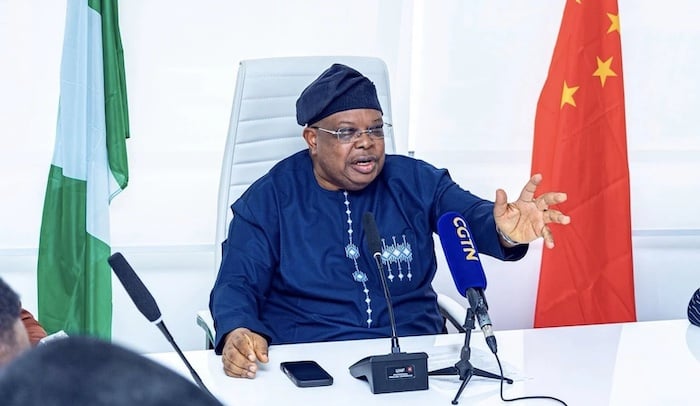
The Minister of State for Petroleum Resources (Gas), Rt. Hon. Ekperikpe Ekpo, said access to gas assets should go beyond licences and acreage, as investors could still be unable to develop assets because of inadequate infrastructure, financing constraints, regulatory uncertainty, limited evacuation capacity and insufficient market access.
Ekpo, who was represented by Senior Technical Adviser, Engineer Abel Nsa, at the 2026 Energy Conference of the Association of Energy Correspondents of Nigeria (NAEC) in Lagos, said Nigeria’s gas reserves had little value if they could not be transformed into electricity, industrial feedstock, jobs, revenues, exports and improved livelihoods.
He said the Federal Government’s Decade of Gas Initiative was aimed at moving Nigeria from being simply rich in gas resources to being rich in gas-based economic opportunities.
According to him, gas must increasingly serve as a catalyst for industrialisation, power generation, transportation, manufacturing, fertiliser production, liquefied petroleum gas adoption and other productive activities.
Ekpo said critical infrastructure projects, including the Ajaokuta-Kaduna-Kano (AKK) and OB3 gas pipelines, were being prioritised to strengthen the national gas network and connect supply with major demand centres.
“Infrastructure is the bridge between our resources and the industries, power plants, businesses and households that need them,” he said.
The minister said the government was also working to create a more attractive environment for investment through reforms introduced under the Petroleum Industry Act 2021 and targeted fiscal and regulatory measures for gas development.
He said the measures were intended to improve competitiveness, reduce barriers and enhance project bankability.
“Our message to credible investors is clear: Nigeria is open for responsible investment in its gas sector,” Ekpo said.
He, however, said government could not develop the sector alone, stressing the need for capital, technology, expertise and commercial discipline from the private sector.
He also called for stronger collaboration among regulators, financial institutions, development partners and industry players to ensure viable gas projects move from concept to final investment decision and ultimately production.
Ekpo said the opportunities from Nigeria’s gas resources should not be limited to a few large players, urging greater participation by indigenous companies, independent producers, infrastructure developers, technology providers and emerging energy businesses.
He said empowering more Nigerian players would deepen competition, strengthen local capacity and ensure a greater share of the value created within the energy sector remained in the country.
The minister also stressed the need to maximise domestic gas utilisation, identifying gas-to-power, liquefied natural gas, liquefied petroleum gas, compressed natural gas, fertiliser, petrochemicals and other gas-based industries as opportunities for investment, industrial development and job creation.
He said government initiatives to expand LPG access and promote CNG adoption were aimed at bringing the benefits of gas closer to Nigerians.
“Our ambition is to ensure that gas is not simply produced in Nigeria, but that Nigerians can use it, build businesses around it and benefit economically from it,” he said.
Ekpo further said Nigerian Content should evolve from participation in contracts to ownership of capabilities, technology, capital and assets, while host communities should also see tangible benefits from petroleum operations.
He said government’s responsibility was to provide policy certainty, regulatory clarity, infrastructure and an enabling environment for investors and operators, while industry players were expected to bring capital, innovation, efficiency and a commitment to developing Nigeria’s resources responsibly.
He said the ultimate objective was to move from access to assets, to development of assets, utilisation and broad-based economic growth.
October 9, 2026
- NNPC Reports Nigeria’s Crude Production At 1.821 Million Bpd
- FG warns petrol subsidy return could push petrol to N2,000, naira to N3,000/$
- Petrol Depot Prices Drop to N1,350 as FG Proposes Price Ceiling
- FG Courts Investors, Targets Accelerated Metering and Enhanced Gas Supply to Unlock Power Sector Value