

The Federal Government has warned that returning petrol subsidy could push the pump price of petrol to at least N2,000 per litre and weaken the naira to about N3,000 per dollar within months.
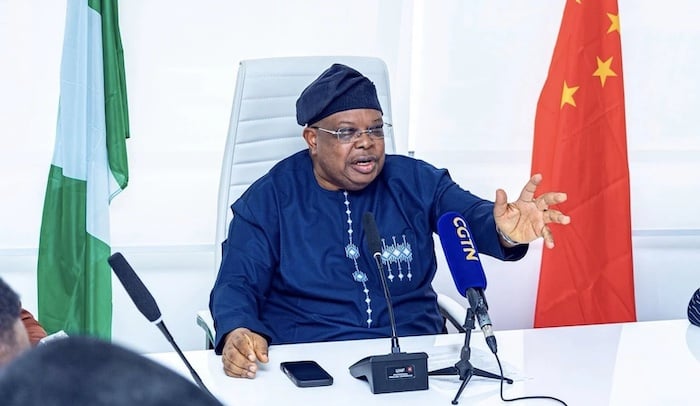
Taiwo Oyedele, the Minister of Finance and Coordinating Minister of the Economy, gave the projection on Thursday during a press briefing on fuel prices and the subsidy debate in Abuja.
Oyedele said restoring subsidy would reduce government revenue. The government also fears it could trigger a sovereign credit downgrade.
A downgrade would increase borrowing costs.
The minister warned of capital flight and a fall in foreign exchange reserves. Capital flight would reduce the supply of dollars in the economy.
A fall in reserves would add pressure on the naira. Both outcomes would make it harder for the government to manage the exchange rate.
The resulting pressure could weaken the naira to about N3,000 per dollar. It could also reverse recent progress in inflation and interest-rate reductions, according to Oyedele. The warning links the fuel subsidy debate to the country’s exchange rate and price stability outlook.
A weaker naira would raise the cost of imported goods. It would also affect businesses that rely on imported raw materials, equipment or services.
A pump price of N2,000 per litre would raise transport and production costs. Those costs would likely feed into the prices of goods and services.
For consumers, the warning points to a direct link between petrol subsidy and the cost of living. A petrol price of N2,000 per litre would affect how much Nigerians pay for transport.
A naira at N3,000 per dollar would affect the price of imported goods and inputs for businesses.
For businesses, a weaker naira raises the cost of imports and servicing foreign loans. A higher petrol price raises logistics costs. Both would squeeze margins. For households, transport and food prices would come under pressure.
The Federal Government’s position is that a return to subsidy would reverse recent gains in inflation and interest rates.
It would also put more pressure on foreign exchange reserves. The subsidy debate therefore goes beyond petrol. It touches the naira, government revenue and the cost of doing business in Nigeria.
The projection came within months on the timeline given by the minister. That suggests the effects could be felt quickly if subsidy returns. Revenue loss, downgrade risk, capital flight and reserve depletion would combine with naira weakness.
That combination would complicate economic management.